Sponsored by

Obesity: the role of genetics, biology and physiology
Article 02
Sponsored by
Obesity: the role of genetics, biology and physiology
Article 02
In this article, we look at the specific role that biology and genetics have in overweight and obesity. We also explore the complex interplay of our body’s systems and the external environment. See the rest of Economist Impact’s Science of Obesity series for more about the role of the social, cultural and built environments we live in (the social determinants of health) and the mental health aspects of obesity.
How is food intake regulated?
The human brain and body has evolved a finely tuned system to balance energy intake and expenditure (and, ultimately, body weight) to enable us to deal with disease, feast or famine. In this article, we explore this system to understand the implications for how and why people develop obesity.
This complex, dynamic system consists of three systems that work together:1
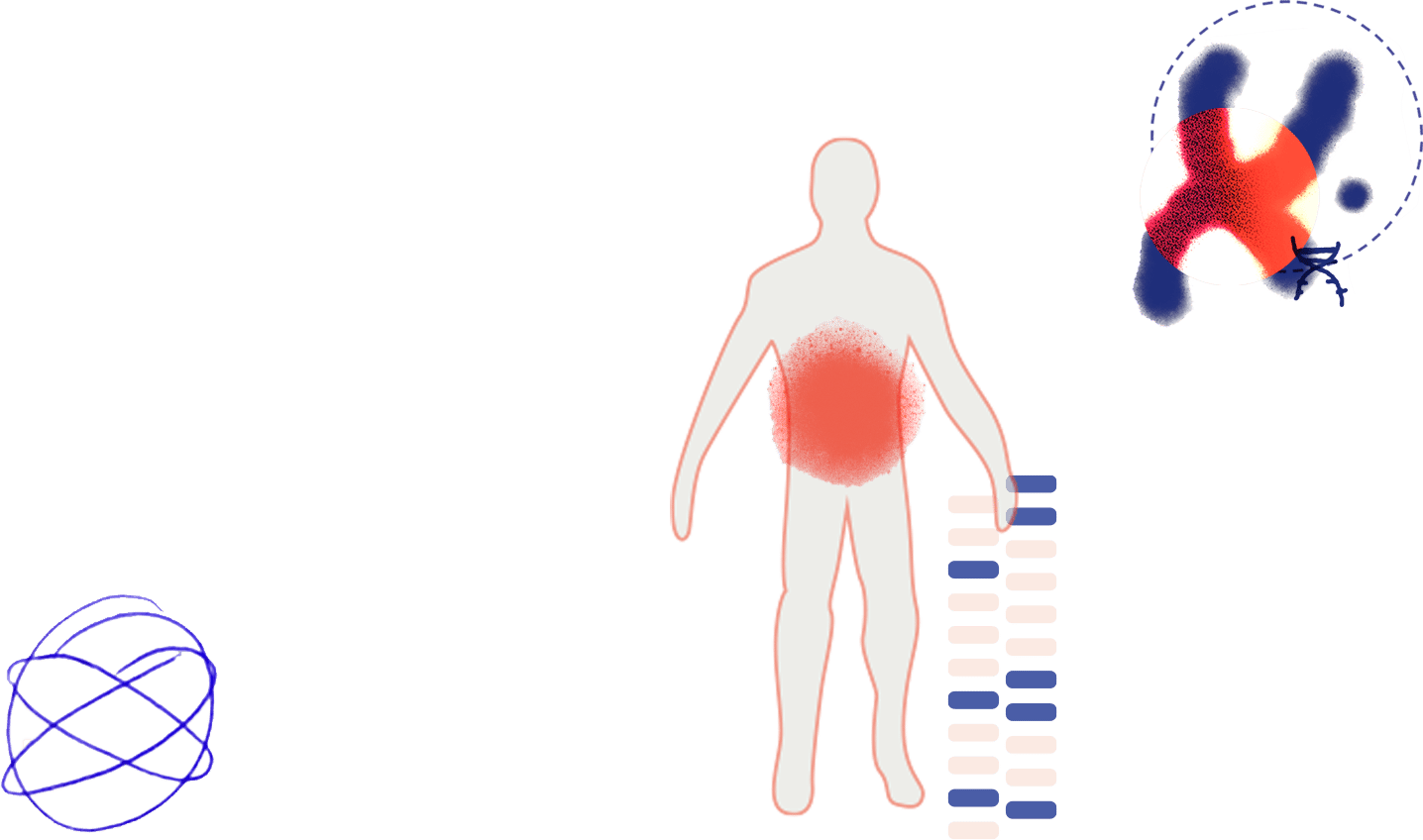
Figure 1: How food intake affects our brain (Adapted from Campos et al. 2022)1
"You can try and trick the hedonic system but you can’t give up food."
Professor Arya Sharma, Founder of Obesity Canada
Problems and disruptions in any of these three systems can make people more likely to develop obesity. The way that these systems work together is explained in Figure 1.
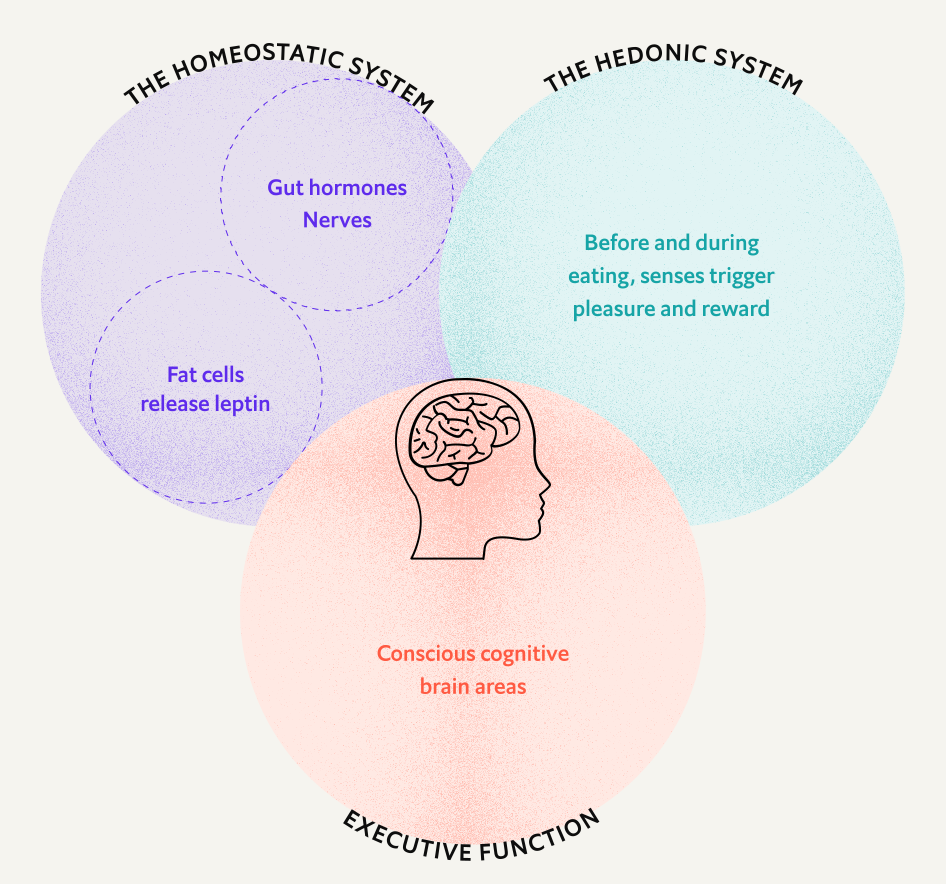
Figure 1: How food intake affects our brain (Adapted from Campos et al. 2022)1
How are our genetics linked to these systems?
There are over 1,000 gene variants associated with obesity.3 Each variant has a small effect, but they add up when a person has several of them, predisposing that individual to obesity (polygenic obesity).3 It is rare that someone has a single genetic defect that affects a key hormone within the homeostatic system, causing obesity—only around 5% of people with obesity have this type of “monogenic obesity”.3
However, genetics does not fully explain the rise in obesity over the past 40 years, a period that is too short for genetic mutations to have evolved across populations, neither does it explain variation across different socioeconomic groups. What has changed is our sociocultural and food environment.4 Research has shown that high-fat diets can disrupt both the hedonic and homeostatic systems, highlighting how the biology of our bodies is affected by the environment that we live in.5
“We still have a tremendous amount of work to do with respect to re-designing our environment, our society, our neighbourhoods, our cities in a way that promotes health and sustained weight control over time.”
Dr David Sarwer, Director for Obesity Research and Education, Temple University
Can we influence our genetic make-up?
When multiple genetic variants combine to make an individual more susceptible to obesity, they can cause metabolic changes that:6

conserve energy, burning fewer calories

increase the tendency to store fat

reduce the ability to burn fat for energy
"We see individuals who have a genetic predisposition to obesity, where the disease goes back generations."
Dr David Sarwer, Director for Obesity Research and Education, Temple University
Although we cannot change our genes, we can influence the level of “gene expression”—the way your body reads and uses the gene sequence—termed “epigenetics”. For example, eating a high-fat diet can change the function of the finely tuned pathways in the homeostatic system in as little as a week.5 However, we can also positively influence gene expression in fat cells, skeletal muscle and the liver through exercise.7 So although genetics affect our predisposition to developing obesity, it is not an unavoidable certainty.
Why it isn’t as easy as fewer calories in, and more calories out
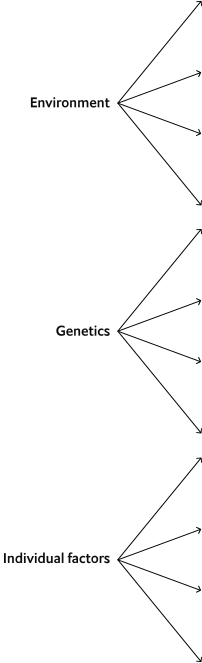
Though it is easy to think of obesity as the outcome of an imbalance between energy consumption and expenditure, it is not so simple. Our individual biology, genetics and our environment interact to influence our weight (see Figure 2).8
Our basal metabolic rate—the calories that a person’s body needs for basic functions—is determined by our body weight, gender, age and genetics.8 This is largely beyond voluntary control. One famous study saw 16 people fed an excess of 1,000 calories per day—by the end of eight weeks some had gained 4kg whilst others only gained 0.5kg, highlighting how differently their bodies responded to the same conditions.9
“There are differences in genetic predisposition. If I expose people to the exact same diet and exact same level of physical activity, some people will gain weight and some won’t.”
Professor Arya Sharma, Founder of Obesity Canada
Weight management is challenging because the body’s systems change in response to our weight. Weight loss is difficult to sustain because the body perceives famine, and its systems compensate in terms of how it uses energy to “protect” us, making it easy to regain weight.4 Whereas when we gain weight our metabolic needs increase, so our homeostatic system sends chemical signals telling us to eat more. We then get used to this increase in consumption and so the cycle continues. There is also some evidence that losing weight causes changes to the chemical signals in our body associated with appetite—for example, increases in feelings of hunger that do not return to pre-weight-loss levels even after a year.10
Figure 2 shows the different influences on our energy expenditure and highlights how daily activity throughout the day has a greater effect than exercise.8 Hence, sedentary jobs have a big impact on weight management because they keep us still for long periods when we might otherwise be moving.
“This is how biology works. This is the biology you are up against anytime you try to lose weight because your body is going to fight you and it does so very, very effectively.”
Professor Arya Sharma, Founder of Obesity Canada
Figure 2: Influences on energy expenditure (Adapted from von Loeffelholz et al. 2022)
*Thermic effect of food refers to the increase in metabolic rate that occurs after a meal. The basal metabolic rate is the metabolic rate during rest, while the person is awake.
Option 1
1-2%
6-10%
8-15%
80%
*Thermic effect of food refers to the increase in metabolic rate that occurs after a meal. The basal metabolic rate is the metabolic rate during rest, while the person is awake.
Figure 2: Influences on energy expenditure (Adapted from von Loeffelholz et al. 2022)
Exercise-related activity
(thermogenesis)
1-2%
Non-exercise activity (thermogenesis)
6-10%
Thermic Effect of Food
(Beyond voluntary control)
8-15%
Basal Metabolic Rate
(Beyond voluntary control)
80%
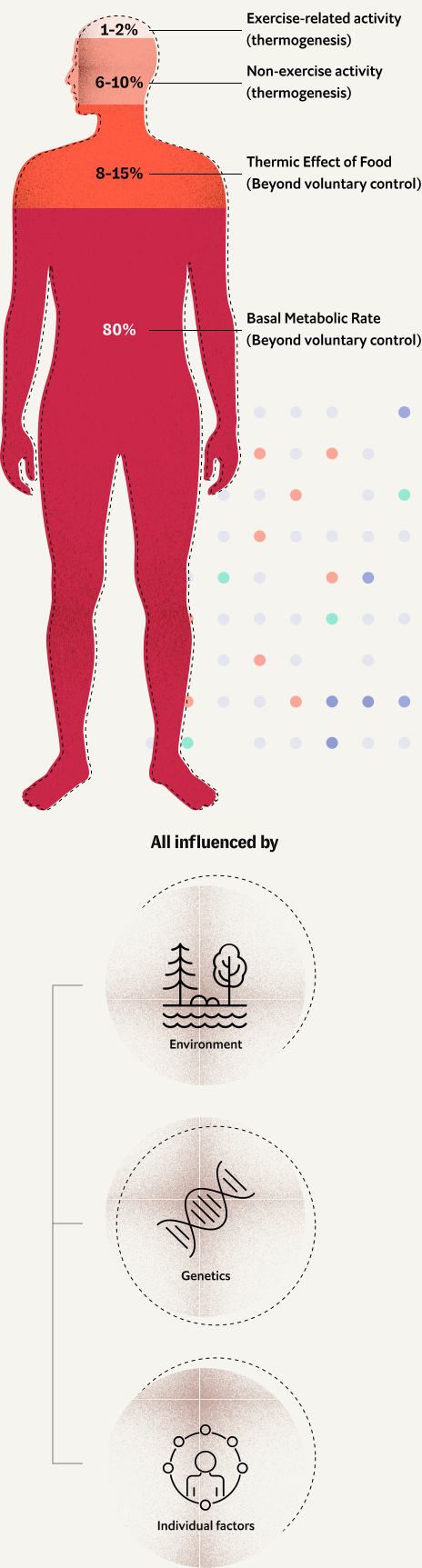
Figure 2: Influences on energy expenditure (Adapted from von Loeffelholz et al. 2022)8
*Thermic effect of food refers to the increase in metabolic rate that occurs after a meal. The basal metabolic rate is the metabolic rate during rest, while the person is awake.
Exercise-related activity (thermogenesis)
1-2%
*Thermic effect of food refers to the increase in metabolic rate that occurs after a meal. The basal metabolic rate is the metabolic rate during rest, while the person is awake.
Figure 2: Influences on energy expenditure (Adapted from von Loeffelholz et al. 2022)
Non-exercise activity (thermogenesis)
6-10%
Thermic Effect of Food
(Beyond voluntary control)
8-15%
Basal Metabolic Rate
(Beyond voluntary control)
80%
What is the physiological impact of obesity?
Obesity is not just excess body weight—the World Health Organisation (WHO) defines it as a “chronic complex disease defined by excessive adiposity [body fat] that can impair health”, and the World Obesity Federation characterises it as a “chronic relapsing disease process”.4, 12 Storing fat is a normal part of a healthy body’s function; issues arise when there is excess body fat. When we have excess fat, the fat cells become enlarged and accumulate around organs, causing inflammation and hormonal imbalances, which contribute to a host of chronic conditions.4, 13
These physiological changes can lead to the body becoming resistant to insulin and the individual developing type 2 diabetes.4, 14 In addition, inflammation and high cholesterol in the blood stream contribute to the development of cardiovascular diseases.4 Obesity can also result in mechanical issues in the body, such as back pain, osteoarthritis and sleep apnoea.7 Figure 3 maps out how some of the physical impacts of obesity can lead to other conditions.4
Figure 3: The relationship between obesity and other key chronic conditions (Adapted from Bray et al. 2017)4
Obesity can directly cause other health conditions, but it also indirectly affects how straightforward those conditions are to manage. In the case of cancer, obesity is a risk factor for developing breast cancer and is associated with a poorer prognosis—the risk of death is more than doubled for women with a BMI of 40 kg/m2 or more.15
What needs to be done?
We see the complex ways in which our individual biological systems, genetics and environment interact in ways that can be damaging to our health. It is clear that only advising people with obesity to diet and exercise is setting them up to fail. The global rise in obesity looks set to continue unless we make some radical changes.
- Tackling misconceptions and increasing overall understanding of the biology of obesity is critical to policymaking. The drivers of obesity are complex and interconnected, and understanding the biological processes involved in obesity can support the design of policies that provide long-term support for people living with obesity that is sustainable and evidence-based. Recognising obesity as a disease in its own right (rather than as a risk factor) would further support addressing it alongside other chronic conditions.
- A long-term and sustainable whole-of-government and whole-of-society response is needed. To prevent and manage obesity, there is a need for investment of money and political will across the whole-of-government and whole-of-society —not just health ministries.
- Policy needs to reflect all drivers of obesity and not just focus on individual-level action. This involves implementing policies and initiatives to reduce our obesogenic environment and address the social determinants of health. This includes the food and drink industry, transport, leisure, and employment practices. These are not new ideas—the WHO and the World Obesity Federation have set out clear strategies, but uptake has been inadequate so far.
“I think there still needs to be greater acceptance of obesity as a disease within healthcare.”
Dr David Sarwer, Director for Obesity Research and Education, Temple University
“We know what works and what doesn’t work and yet a lot of our policy is still at its heart focused on individual-level interventions.”
Dr Sara Bleich, Professor of Public Health Policy, Harvard University
The editorial team at Economist Impact would like to thank the following individuals for generously contributing their time and insights pro bono: Professor Steven Allender, Dr Sara Bleich, Ms Tiffany Petre, Dr David Sarwer, Professor Arya Sharma, Dr Uku Vainik.
References
1 Campos A, Port J, Acosta A. Integrative Hedonic and Homeostatic Food Intake Regulation by the Central Nervous System: Insights from Neuroimaging. Brain Sci. 2022;12(4):431.
2 Farooqi S. Obesity and thinness: insights from genetics. Philos Trans R Soc Lond B Biol Sci. 2023;378(1888):20220205.
3 Keller M, Svensson S, Rohde-Zimmermann K, et al. Genetics and Epigenetics in Obesity: What Do We Know so Far? Curr Obes Rep. 2023.
4 Bray G, Kim K, Wilding J. Obesity: a chronic relapsing progressive disease process. A position statement of the World Obesity Federation. Obes Rev. 2017;18(7):715-23.
5 Szalanczy A, Key C, Solberg Woods L. Genetic variation in satiety signaling and hypothalamic inflammation: merging fields for the study of obesity. J Nutr Biochem. 2022;101:108928.
6 Concepción-Zavaleta M, Quiroz-Aldave J, Durand-Vásquez M, et al. A comprehensive review of genetic causes of obesity. World J Pediatr. 2023.
7 Trang K, Grant S. Genetics and epigenetics in the obesity phenotyping scenario. Rev Endocr Metab Disord. 2023;24(5):775-93.
8 Von Loeffelholz C, Birkenfeld A. Non-exercise activity thermogenesis in human energy homeostasis. In: Feingold KR, Anawalt B, Blackman MR, et al., editors. Endotext [Internet]. South Dartmouth (MA)2022.
9 Levine J. Nonexercise activity thermogenesis – liberating the life-force. Journal of Internal Medicine. 2007;262(3):273-87.
10 Sumithran P, Prendergast L, Delbridge E, et al. Long-Term Persistence of Hormonal Adaptations to Weight Loss. N Engl J Med 2011;365(17):1597-604.
11 Von Loeffelholz C, Birkenfeld AL. Non-Exercise Activity Thermogenesis in Human Energy Homeostasis. [Updated 2022 Nov 25]. In: Feingold KR, Anawalt B, Blackman MR, et al., editors. Endotext [Internet]. South Dartmouth (MA): MDText.com, Inc.; 2000-. Available from: https://www.ncbi.nlm.nih.gov/sites/books/NBK279077/.
12 WHO. Health service delivery framework for prevention and management of obesity [Internet]. World Health Organization. Available from: https://iris.who.int/bitstream/handle/10665/367784/9789240073234-eng.pdf?sequence=1.
13 CDC. Health Effects of Overweight and Obesity [Internet]. Centers for Disease Control and Prevention (CDC). Available from: https://www.cdc.gov/healthyweight/effects/index.html.
14 Wondmkun YT. Obesity, Insulin Resistance, and Type 2 Diabetes: Associations and Therapeutic Implications. Diabetes, Metabolic Syndrome and Obesity. 2020;13(null):3611-6.
15 Ajabnoor G. The Molecular and Genetic Interactions between Obesity and Breast Cancer Risk. Medicina (Kaunas). 2023;59(7).
Share your thoughts on social media

Lorem ipsum dolor sit amet, consectetur adipiscing elit
Lorem ipsum dolor sit amet, consectetur adipiscing elit lorem ipsum dolor sit amet, consectetur adipiscing elit, sed do eiusmod tempor incididunt ut labore et dolore magna aliqua.
Explore more articles
Article 01
What is obesity and why does it matter?
By 2035, around half of the world's population will be living with overweight or obesity, so a whole-of-government response is needed.
Article 04
Mental health aspects of obesity
People living with obesity can face stigma, discrimination, low self-esteem and depression. Weight bias and stigma must not be tolerated.

Article 03
Social determinants of health and obesity
Social determinants of health, including food marketing, built environment, education and income, contribute to the development of obesity.