The politics of obesity: building a coalition of leaders to unlock policy change
Policy Insight SERIES on Obesity | 02
Sponsored by

Sponsored by
The politics of obesity: building a coalition of leaders to unlock policy change
Policy Insight Series on Obesity | 02
Panellists’ opening remarks

Obesity is a whole-of-society issue that demands a response that includes, but is not limited to the health sector. It requires coordinated action across ministries—health, finance, education, agriculture and beyond—because its causes and consequences are woven through every part of society.
Evidence and evaluation sustain political will. While momentum may begin with symbolic actions or advocacy, lasting progress is driven by implementation, adaptation, clear targets and proof of impact. Political will must be earned, demonstrated and defended over time.
Strong political commitment to addressing obesity is an investment in health system and societal resilience. Improved prevention and management of obesity supports NCD control, strengthens system sustainability and prepares societies for future challenges.
There’s no one-size-fits-all solution. Global frameworks like World Health Organisation (WHO) guidance provide a foundation for multisectoral action tailored to local needs. Effective strategies respond to local needs, align with national priorities, and bring the right mix of actors to the table.
Reflections from an Economist Impact event, sponsored by Novo Nordisk, on the sidelines of the World Health Assembly
Key discussion takeaways
Key discussion takeaways
- Obesity is a whole-of-society issue that demands a response that includes, but is not limited to the health-sector. It requires coordinated action across ministries—health, finance, education, agriculture and beyond—because its causes and consequences are woven through every part of society.
- Evidence and evaluation sustain political will. While momentum may begin with symbolic actions or advocacy, lasting progress is driven by implementation, adaptation, clear targets and proof of impact. Political will must be earned, demonstrated and defended over time.
- There’s no one-size-fits-all solution. Global frameworks like WHO guidance provide a foundation for multisectoral action tailored to local needs. Effective strategies respond to local needs, align with national priorities, and bring the right mix of actors to the table.
- Strong political commitment to addressing obesity is an investment in health system and societal resilience. Improved prevention and management of obesity supports NCD control, strengthens system sustainability, and prepares societies for future challenges.
Key discussion takeaways
- Obesity is a whole-of-society issue that demands a response that includes, but is not limited to the health-sector. It requires coordinated action across ministries—health, finance, education, agriculture and beyond—because its causes and consequences are woven through every part of society.
- Evidence and evaluation sustain political will. While momentum may begin with symbolic actions or advocacy, lasting progress is driven by implementation, adaptation, clear targets and proof of impact. Political will must be earned, demonstrated and defended over time.
- There’s no one-size-fits-all solution. Global frameworks like WHO guidance provide a foundation for multisectoral action tailored to local needs. Effective strategies respond to local needs, align with national priorities, and bring the right mix of actors to the table.
- Strong political commitment to addressing obesity is an investment in health system and societal resilience. Improved prevention and management of obesity supports NCD control, strengthens system sustainability, and prepares societies for future challenges.
Obesity is a systemic and political issue
A successful plan to tackle obesity involves decisions across government, from health policy, fiscal policy and food regulation, to education, urban planning and social protection. Treating obesity as solely the responsibility of health ministries underestimates its complexity and limits progress. It demands a comprehensive whole-of-society and whole-of-government response. But how do we achieve meaningful, sustained political action?
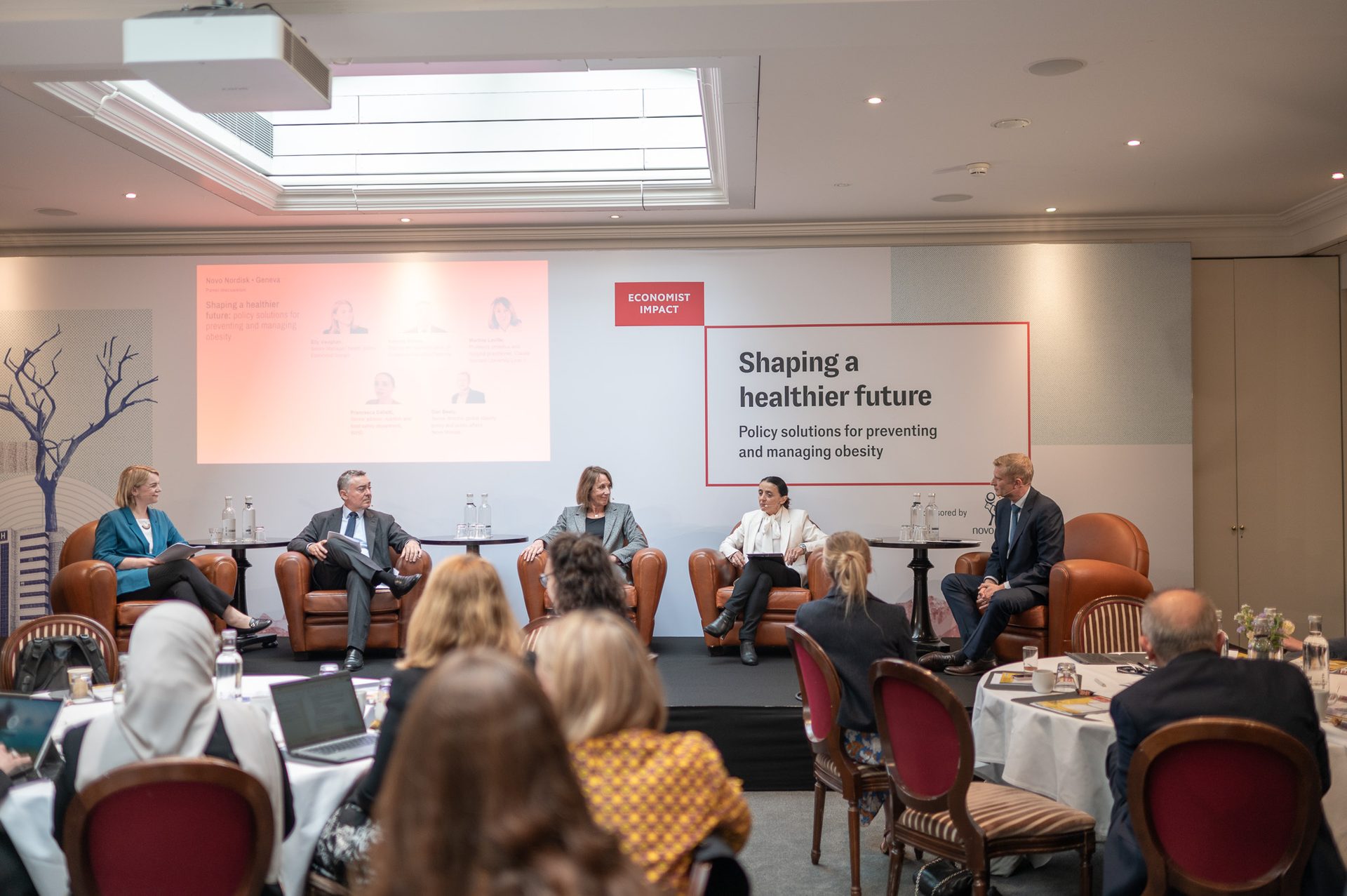
Leaders from government, civil society, international agencies and the private sector gathered to ask that question at the Economist Impact event, Shaping a healthier future: policy solutions for preventing and managing obesity, sponsored by Novo Nordisk, on the sidelines of this year’s World Health Assembly. The answer, emerging from this conversation, is clear: progress on obesity is not limited by a lack of solutions, but by how well we seize opportunities to create whole-of-society buy-in at every step. No single actor or ministry can tackle obesity alone. Unlocking change requires coordinated action across sectors and sustained political commitment that is built, leveraged and reinforced over time. Among the voices reinforcing this call for unified action was Dr Francesca Celletti, Senior advisor in WHO’s Nutrition and Food Safety Department. Her message was unequivocal:
“National leadership is fundamental to the response—and advocacy and accountability are just as important.”
Francesca Celletti, Senior advisor, Nutrition and Food Safety Department, WHO
This emphasis on collective responsibility and long-term commitment is echoed in Economist Impact’s National Obesity Action Plan Playbook, sponsored by Novo Nordisk.
Where there’s a will, there’s progress
Some countries are putting this into practice, with visible results. Greece’s national strategy to address childhood obesity offers one example. “Obesity needs to be treated as a horizontal, societal issue,” said Ioannis Ghikas, Permanent Representative of Greece to the United Nations. “We’ve embedded obesity prevention into the health system, upgraded data systems, and established high-level coordination from the prime minister’s office.”
Greece’s approach reflects the reality of obesity prevention and management: it doesn’t sit neatly within one ministry or sector. Effective response requires education, urban planning, finance, social protection and public health to synergise their work, guided by a shared vision and accountability.
"This isn’t just a health challenge—it’s a governance challenge.”
Ioannis Ghikas, Permanent Representative of Greece to the United Nations
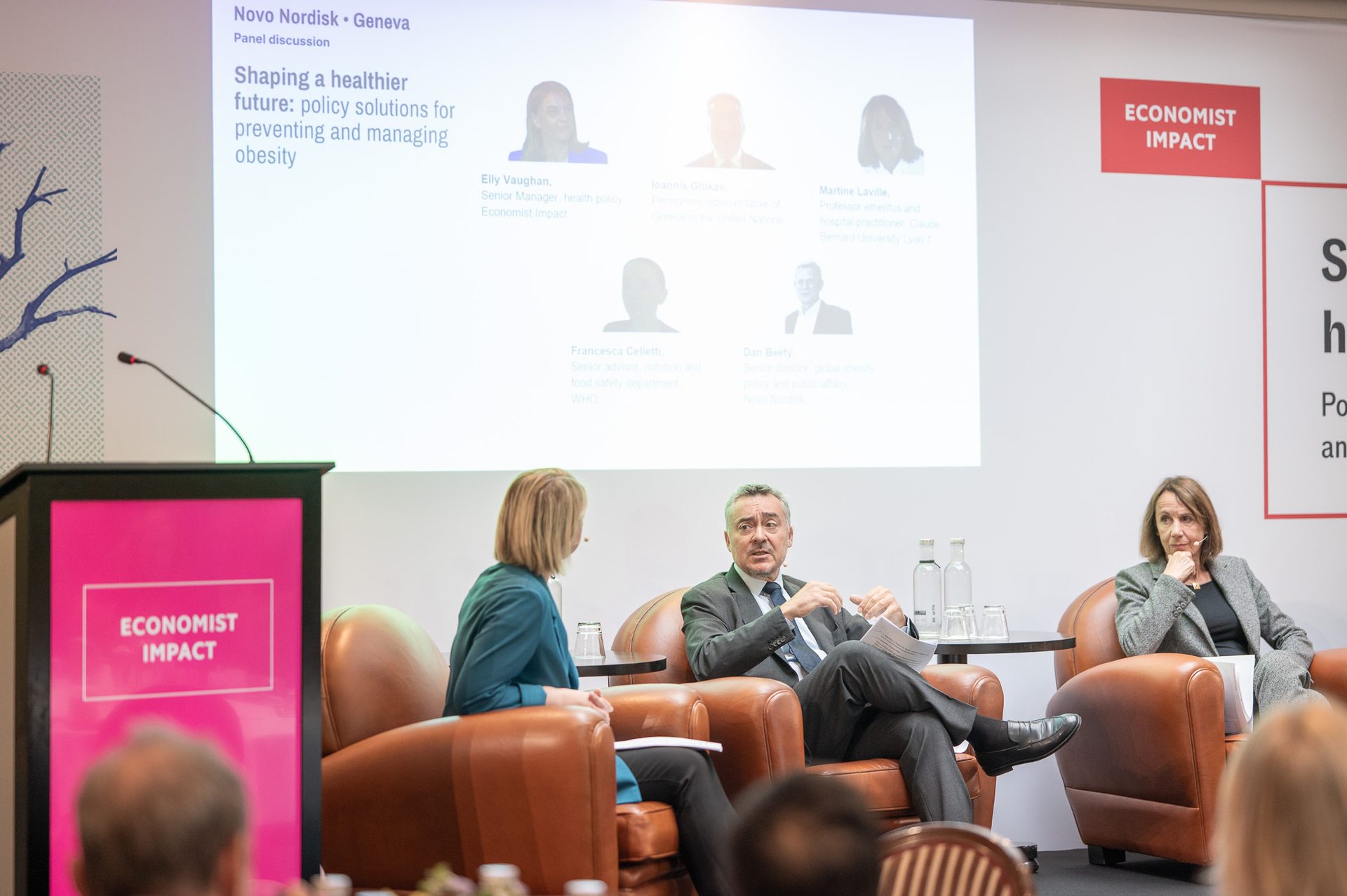
Ioannis Ghikas, Permanent Representative of Greece to the United Nations, during the panel discussion
Key elements
Unifying collaboration: Addressing obesity demands a whole-of-society approach, detailing and assigning stakeholders’ responsibilities across government, academia, NGOs and the private sector to ensure accountability, efficiency and impact.
Integrating policy approaches: A “health-in-all-policies” approach embeds health considerations into policies across sectors, such as urban planning, education, and agriculture. This is essential to tackle the underlying social and environmental drivers of obesity, while also ensuring people living with obesity have access to quality care they need.
Creating the window for advancing political will
But not all political commitment comes easily or quickly. Sometimes, momentum is built over smaller, symbolic steps. France’s experience shows how even modest early steps can build momentum towards obesity prevention and management. Dr Martine Laville, Professor emeritus and hospital practitioner at Claude Bernard University Lyon 1, explained that the country’s first national roadmap for obesity, launched in 2010, made a critical move by establishing multidisciplinary centres of excellence—bringing long-overdue visibility to obesity treatment. Since then, these centres have formed a national network offering more coordinated care to people living with obesity. It was an important beginning, she noted, but one that still falls short of what is needed: recognition of obesity as a chronic disease.
The lack of official disease recognition remains a key barrier for change, argued Laville, as governments will lack the incentive to prioritise reforms that integrate obesity into primary health care pathways. Without official disease recognition, people living with obesity will continue to face stigma and lack of access to the prevention and management services they need.
“If it’s a disease, it means you can call up for help and you will get real management of your disease.”
Dr Martine Laville, Professor emeritus and hospital practitioner, Claude Bernard University Lyon 1

Martine Laville, Claude Bernard University Lyon 1, during the panel discussion
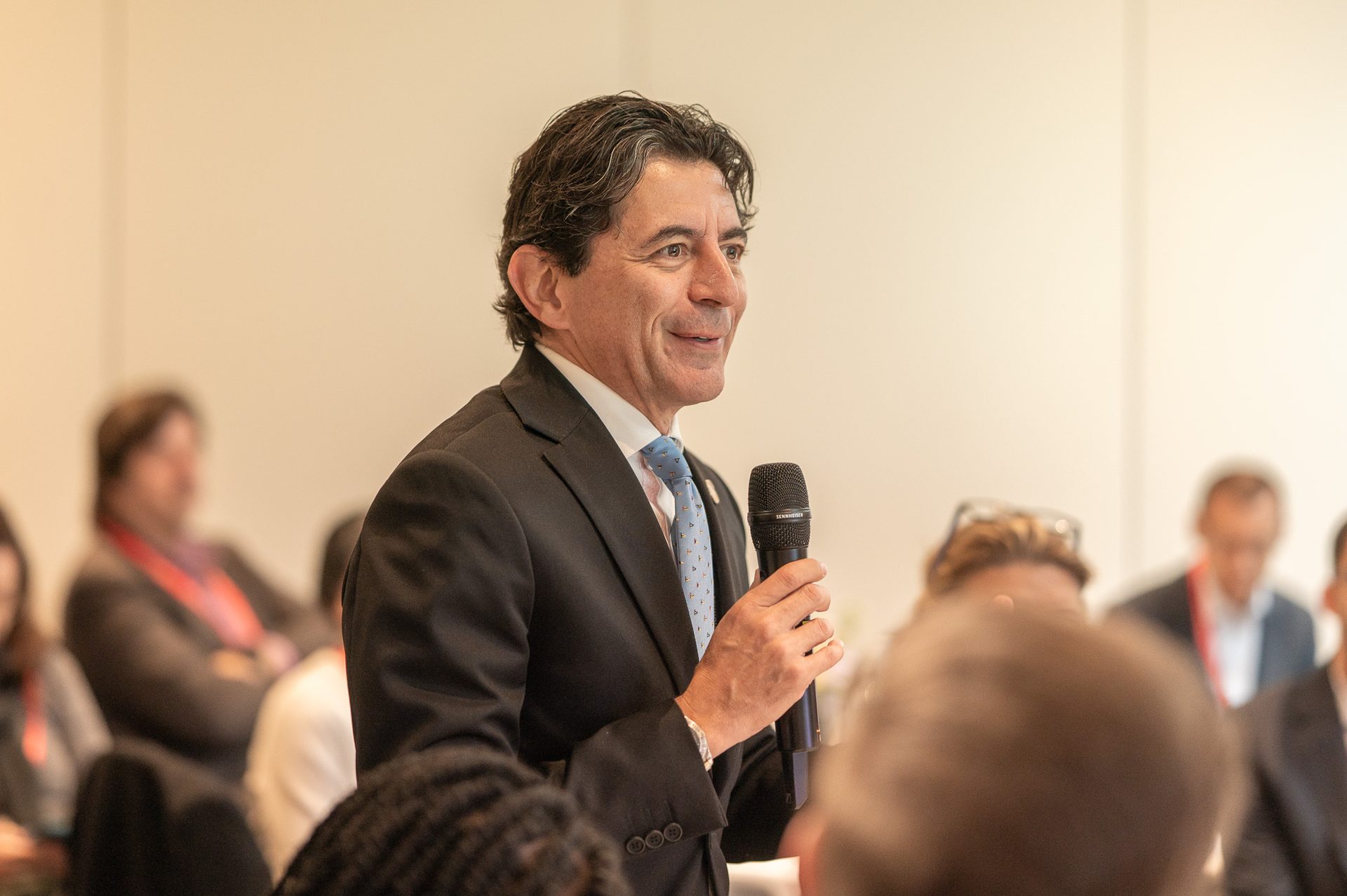
Simon Barquera, from the National Institute of Public Health Mexico, contributes to the discussion
The political commitment needed to increase momentum on obesity
Even when the need for action is clear, building political will is a long process. Dr Simón Barquera, Director of the Nutrition and Health Research Centre at the National Institute of Public Health in Mexico joined the discussion as an audience member. He shared that in Mexico, it took more than a decade to implement policies like sugar sweetened beverage taxes and nutrition labelling. Critical to implementing these measures was “a strong alliance of professionals, civil society and government champions to overcome pushback” according to Dr Barquera.
Once in place, those policies had both impact and influence. Dr Barquera described how the country’s efforts to share evaluation results helped inspire a ripple effect beyond its borders, with other countries adopting similar measures within a year or two.
“That’s the power of political will, backed by evidence.”
Dr Simón Barquera, Director of the Nutrition and Health Research Centre at the National Institute of Public Health, Mexico
But sustaining progress requires more than just initial action. As he emphasised, policies must be defended every day, underlining the need for consistent, credible evidence to maintain political commitment for prevention and management of obesity over time. Finding opportunities to build and sustain political commitment is hard. Sometimes, momentum begins not with sweeping reforms, but with smaller decisions that shift perception and open the door to long-term change.
Simple solutions enable scalable change and fortify political will
Translating commitments into coordinated action across systems, sectors and levels of government is what keeps momentum alive. While global frameworks like the WHO Acceleration Plan on Obesity offer the roadmap, meaningful change depends on how these recommendations are adapted, implemented and owned at every level—from national ministries to provinces, cities and individual communities. As Dr Celletti from the World Health Organisation, noted, “It’s in the nitty gritty things that we start to see real movement,” where decisions about who leads, who funds, and who delivers are tailored to the context and coordinated across sectors.
“It’s in the nitty gritty that we start to see real movement.”
Francesca Celletti, Senior advisor, Nutrition and Food Safety Department, WHO
One size does not fit all, she emphasised. Effective action means designing policies around the specific gaps, opportunities and actors within each national and subnational setting. That includes listening closely to what works at the local level and building solutions from the ground up. According to Dr Celletti, this kind of tailored design is what brings sectors together. It creates space for shared ownership, aligns priorities across ministries and communities, and turns high-level strategies into policies that people value and support.
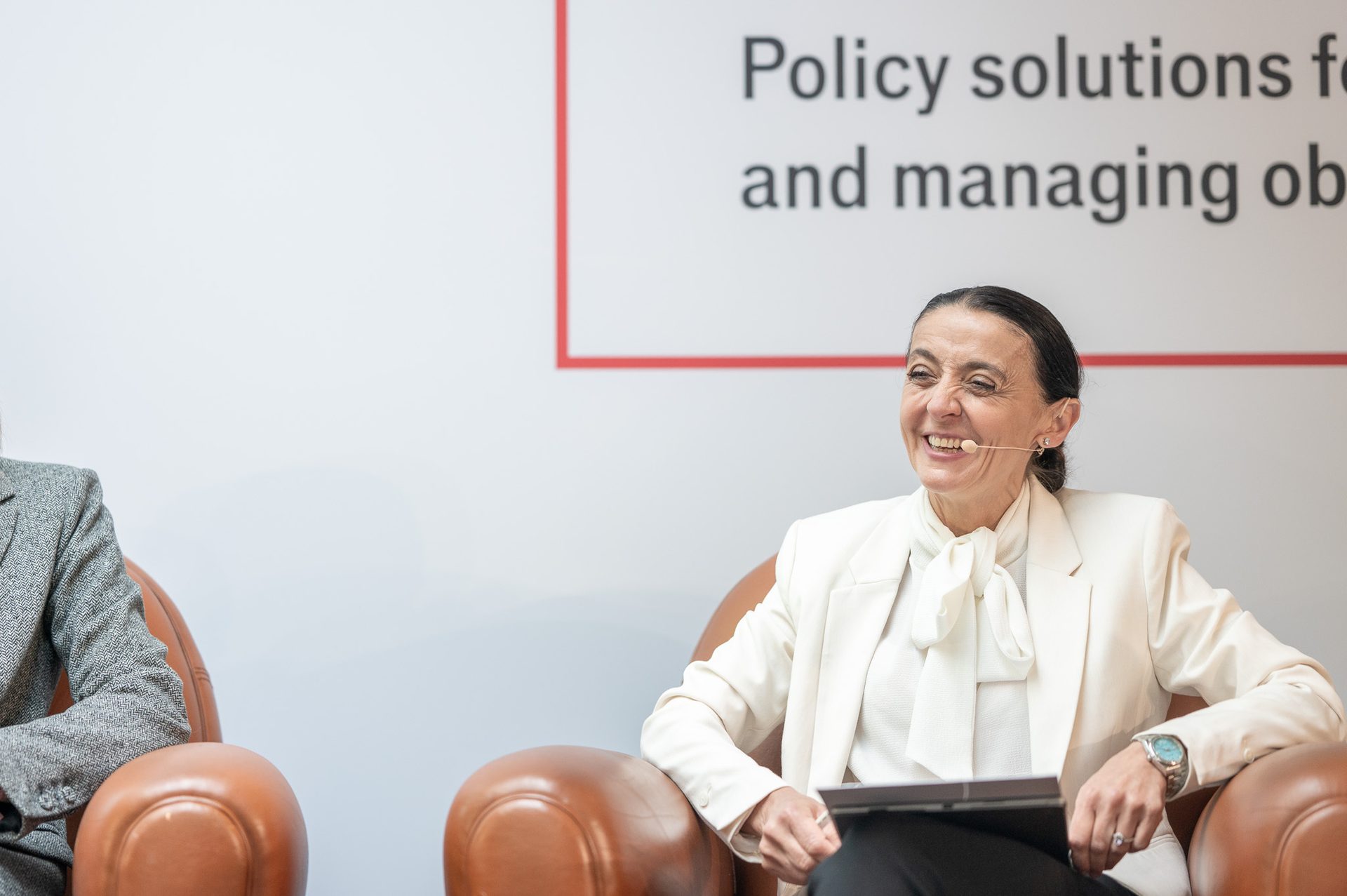
Francesca Celletti, WHO, during the panel discussion
Dr Celletti also cited the example of Mauritius as a clear example of this approach. “When the government introduced school nutrition policies, it moved beyond education reform to engage the agriculture ministry—ensuring school meals were locally and sustainably sourced.” What began as a health intervention became a cross-sector initiative that was nationally coordinated but locally delivered.
"It’s not about copying and pasting solutions,” she added, “it’s about designing together with a clear target from the start.” She said that change often begins small—at schools, in municipalities or through pilot programmes—but with the right alignment and support, it can be scaled nationally. Political will is not just necessary at the outset; it is fortified through practice. When interventions are jointly designed, locally delivered and nationally supported, they reinforce commitment and engagement across all levels of government. Small, successful actions help strengthen accountability, elevate visibility, and embed obesity as a sustained political priority.
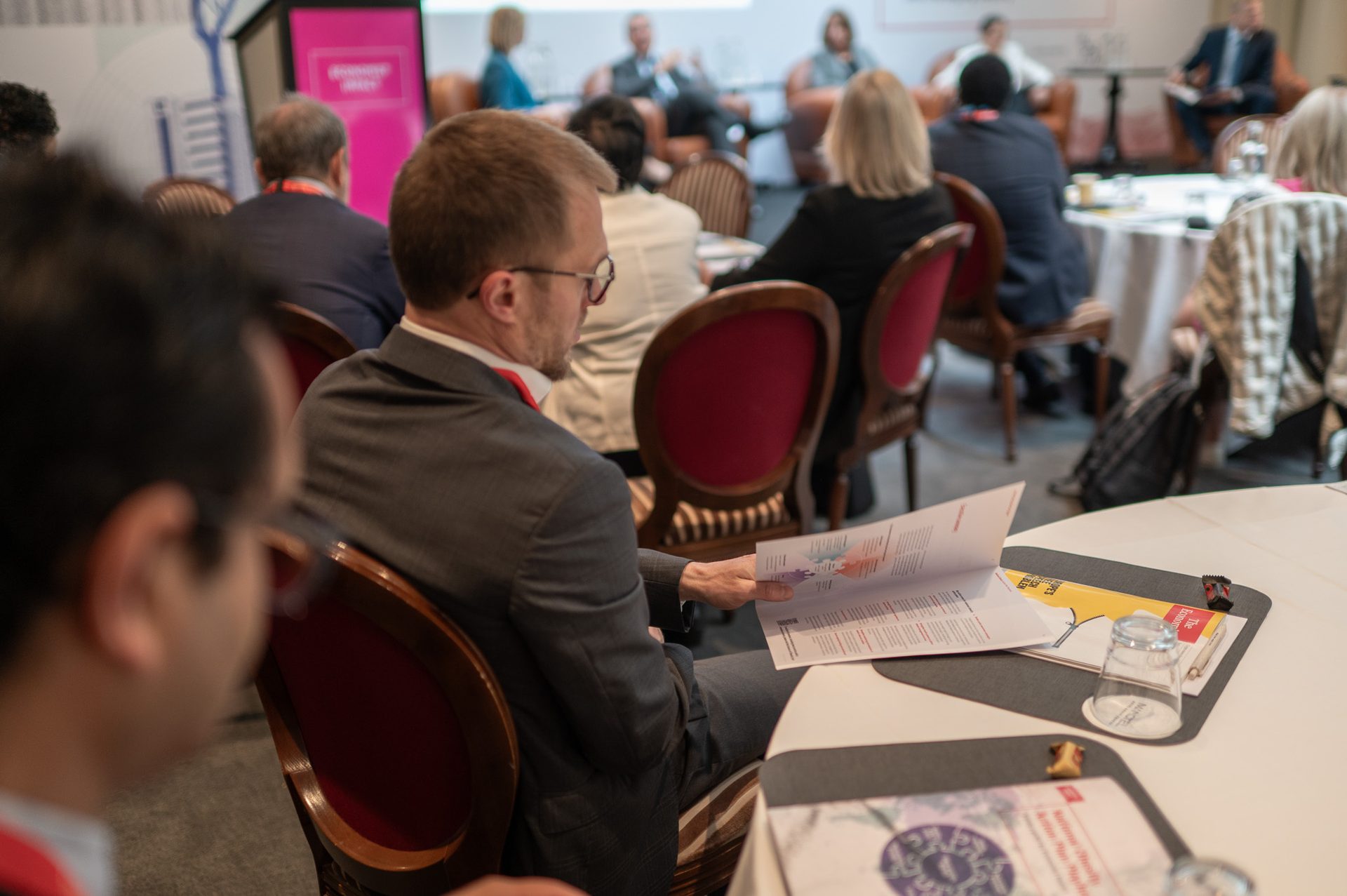
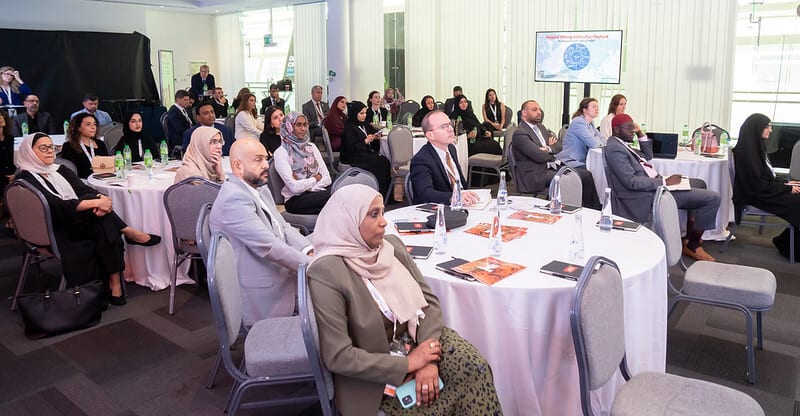
Delegates engaging with the Economist Impact National Obesity Action Plan Playbook at the event
Political will around obesity as a pathway to NCD resilience
All of this—the leadership, the coalitions and shared delivery—is ultimately about one thing: resilience.
Obesity is deeply interconnected with other chronic conditions. Managing obesity effectively is therefore critical to ensure the resilience of our health systems. As Tova Tampa, Health systems adviser in the Primary Health Care Policy & Partnerships team at WHO, put it, “Integrating obesity into national health strategies isn’t just about treatment—it’s a way to drive more holistic, community-focused, and multisectoral health system reform.” With rising rates of multimorbidity and shrinking fiscal space, tackling obesity challenges governments to rethink how diseases are managed, both in terms of prevention and long-term management and care.
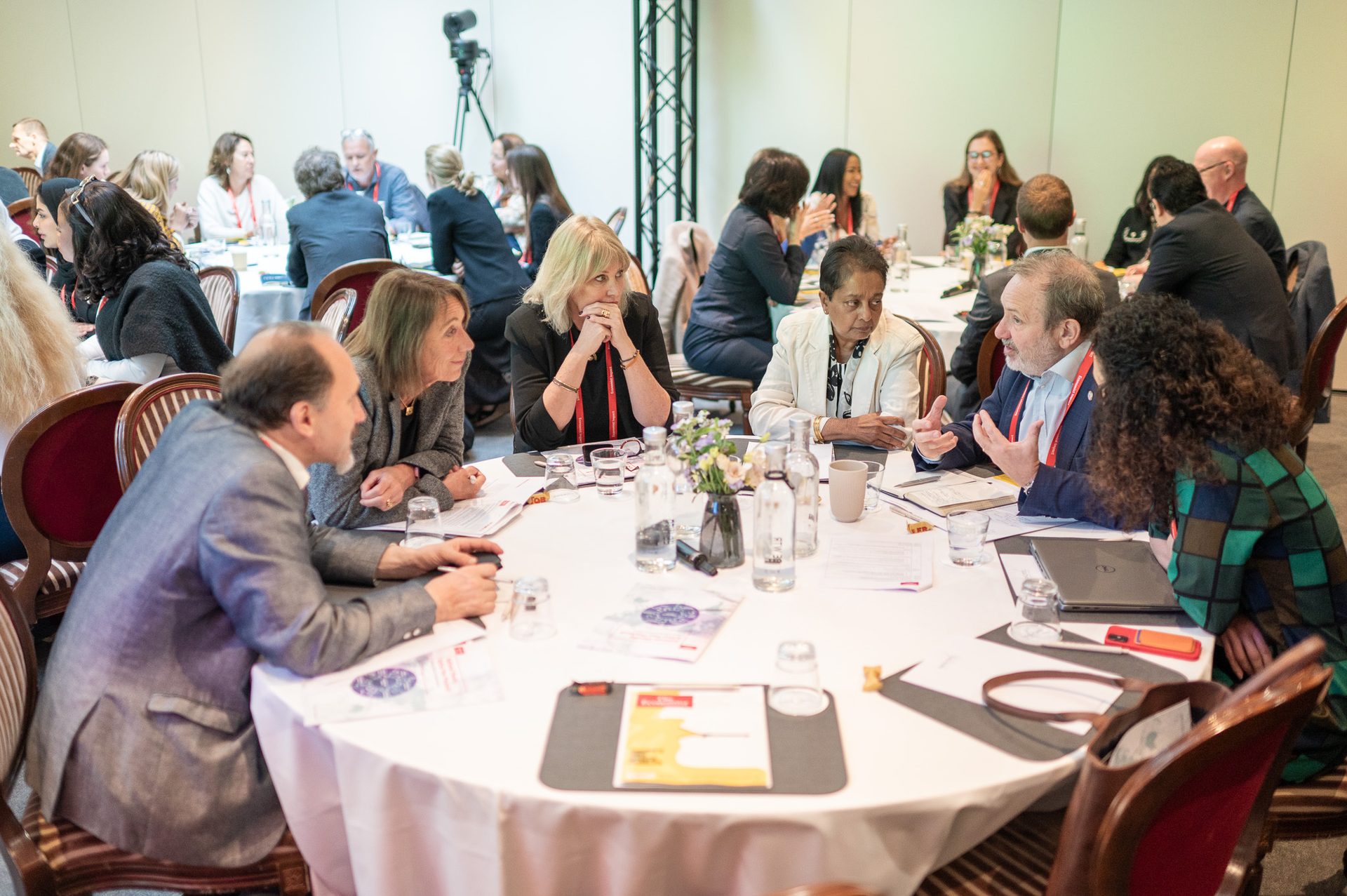
Delegates participating in roundtable discussions after the panel session
Resilience means being able to adapt. And that requires new coalitions, new models of care , and sustained political commitment. Political will for action on reducing obesity is not just necessary—it is how we future-proof health systems against the growing burden of NCDs. Or, as Beety concluded, it’s how “we free our societies, economies and people from these conditions so people can live healthier for longer.”
“In this meeting we heard again, and in the playbook we saw, how implementing the WHO acceleration plan to stop obesity is leading to serious change.”
Francesco Branca, Invited professor, University of Geneva
This event was part of a series of events across 2025, building on Economist Impact’s National Obesity Action Plan Playbook, sponsored by Novo Nordisk. Also check out the policy insights on Don’t fix the person, fix the system: a new vision for tackling obesity arising from our discussion during Abu Dhabi Global Health Week.
With thanks to those who contributed their insights at the World Health Assembly side event via the panel and audience contributions:
- Dan Beety, Senior director, Global obesity policy and public affairs, Novo Nordisk
- Francesca Celletti, Senior advisor, Nutrition and food safety department, WHO
- Ioannis Ghikas, Permanent Representative of Greece to the United Nations
- Martine Laville, Professor emeritus and hospital practitioner, Claude Bernard University Lyon 1
- Simón Barquera, Director of the Nutrition and Health Research Centre at the National Institute of Public Health
- Francesco Branca, Invited professor, University of Geneva
- Tova Tampa, Health systems adviser, Primary Health Care Policy & Partnerships, WHO
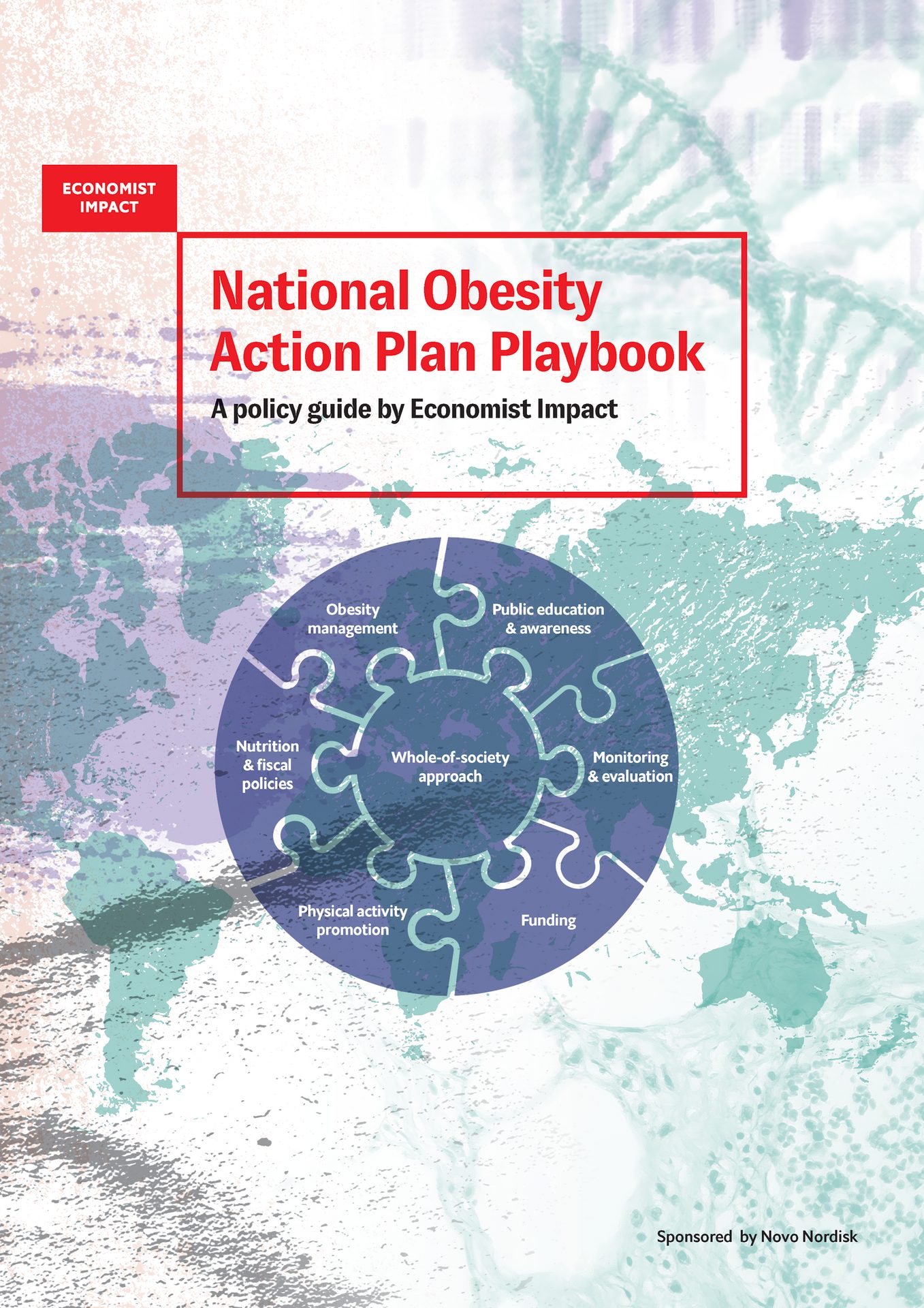
The National Obesity Action Plan Playbook contributes to advancing policy and national action on obesity by providing policymakers with a practical framework for designing and strengthening national strategies to prevent and manage obesity. Drawing on WHO guidance, global expertise, and case studies, it identifies key action areas and highlights best practices for tackling obesity’s systemic drivers through a whole-of-government and whole-of-society approach.